
Richest governors in Nigeria 2026 are not just political leaders — they are some of the most financially sophisticated people in the country.
Nigeria has 36 state governors. Every one of them earns the same official salary — approximately ₦7.78 million per year, or roughly ₦648,581 per month. That is less than what a mid-level Lagos banker earns. Yet some of these governors are worth hundreds of millions of dollars.
How? Because the most financially successful governors in Nigeria did not wait for government salaries to make them rich. They arrived at the government house already wealthy — with oil companies, real estate empires, banking careers, and business portfolios built over decades. Then they used their governorship to compound what they already had.
This article profiles the top 10 richest currently serving governors in Nigeria in 2026 — who they are, exactly where they come from, how much they are worth, and the specific businesses and careers that made them wealthy before and during their time in office.
Quick Answer: Top 10 Richest Governors in Nigeria 2026
| Rank | Name | State | Net Worth | Industry |
|---|---|---|---|---|
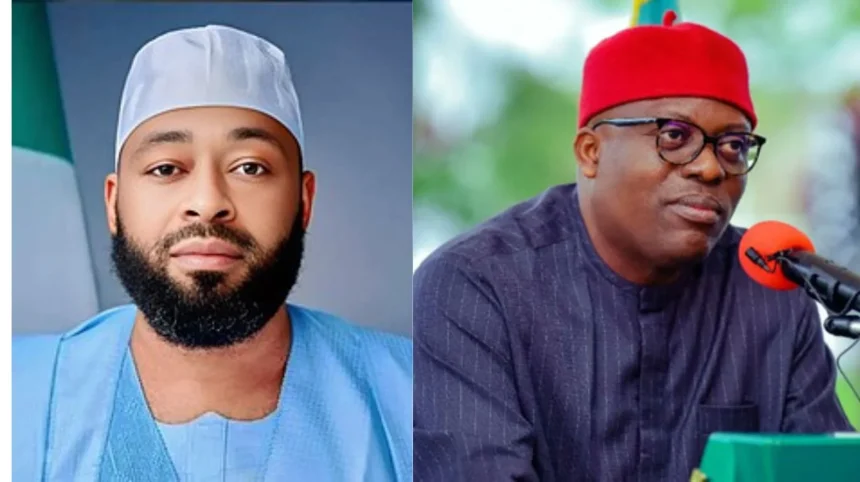
| 1 | Mohammed Umar Bago | Niger State | $700 Million | Banking & Investments |
| 2 | Siminalayi Fubara | Rivers State | $600 Million | Finance & Oil |
| 3 | Uba Sani | Kaduna State | $400 Million | Real Estate & Politics |
| 4 | Dapo Abiodun | Ogun State | $350 Million | Oil & Gas |
| 5 | Charles Soludo | Anambra State | $300 Million | Banking & Economics |
| 6 | Alex Otti | Abia State | $200 Million | Banking & Finance |
| 7 | Peter Mbah | Enugu State | $180 Million | Oil, Gas & Law |
| 8 | Bala Mohammed | Bauchi State | $150 Million | Real Estate & Politics |
| 9 | Babajide Sanwo-Olu | Lagos State | $130 Million | Banking & Real Estate |
| 10 | Hope Uzodinma | Imo State | $350 Million | Oil Trading & Politics |
Source: Bitpidia, Nigerian Queries, Legit.ng, Nigerian Finder, and verified Nigerian business publications. Net worth figures are estimates as of March 2026.
The Truth About How Nigerian Governors Build Wealth
Before we meet the governors, it helps to understand exactly how Nigerian governors accumulate personal wealth — because the reality is more nuanced than most people think.
Pre-politics business careers are the foundation for the wealthiest governors. The governors on this list — from Dapo Abiodun’s oil company to Alex Otti’s Diamond Bank career to Peter Mbah’s oil and gas firm — all arrived at the government house with businesses already running. Their governorship multiplied existing wealth rather than creating it from scratch.
Real estate investments are the most common wealth vehicle among Nigerian governors. Real estate in Abuja, Lagos, and their home states provides passive income that grows regardless of political fortunes. Most governors buy significant property during their time in office.
Oil and gas connections open up for many governors — especially those from oil-producing states — through their access to government contracts, licensing decisions, and petroleum sector appointments. Some governors use these connections ethically and legally to build legitimate business portfolios.
Banking and finance backgrounds give some governors a natural wealth advantage. Governors who come from banking — like Alex Otti (Diamond Bank MD), Siminalayi Fubara (Accountant-General), and Charles Soludo (CBN Governor) — arrive with both financial knowledge and the networks to deploy it effectively.
Now let us meet the ten wealthiest governors sitting in office in 2026.
Top 10 Richest Governors in Nigeria 2026
1. Mohammed Umar Bago — $700 Million
Full Name: Mohammed Umaru Bago Date of Birth: February 22, 1974 State: Niger State Hometown: Minna, Chanchaga Local Government Area, Niger State Net Worth: $700 Million Assumed Office: May 29, 2023 Previous Career: Banker (UBA, FCMB, Afribank) → House of Representatives member (3 terms)
Mohammed Umar Bago is the richest governor in Nigeria in 2026 with an estimated net worth of $700 million — and the only sitting Nigerian governor to appear on the Forbes list of richest Nigerians.
Born on February 22, 1974, in Minna, Niger State, to parents of Nupe royal extraction, Bago is unusual among Nigerian governors for one simple reason — he was already extraordinarily wealthy before he ever ran for political office. He was born into the wealthy family of Alhaji Muhammadu Mustapha, a member of the Masaba Royal family of Bida. Family wealth gave him a head start that most Nigerian politicians do not have.
He built his professional career in banking, working at United Bank for Africa (UBA), Standard Trust Bank, First City Monument Bank (FCMB), and Afribank before entering politics in 2011. He won his House of Representatives seat for Chanchaga Federal Constituency — and then won it again in 2015 and 2019, becoming one of very few three-term representatives in Nigerian legislative history. He contested for the Speakership of the House in the 9th National Assembly, coming second to Femi Gbajabiamila.
His investment portfolio spans real estate, banking, agriculture, and diverse private sector businesses. He won the Niger State governorship election in 2023 with 469,896 votes. At 52 years old in 2026, he is one of the younger billionaire governors Nigeria has produced.
How He Built His Wealth:
- Family wealth from the Masaba Royal family of Bida, Niger State
- Banking career at UBA, FCMB, Standard Trust Bank, and Afribank
- Three-term House of Representatives career building federal business networks
- Real estate, agricultural, and diverse private investment portfolio
The Lesson From Mohammed Bago: Starting with family wealth is an advantage — but maintaining and multiplying it over decades through banking expertise and political discipline is the real achievement.
2. Siminalayi Fubara — $600 Million
Full Name: Siminalayi Fubara Date of Birth: August 31, 1980 State: Rivers State Hometown: Opobo/Nkoro Local Government Area, Rivers State Net Worth: $600 Million Assumed Office: May 29, 2023 Previous Career: Accountant → Accountant-General of Rivers State
Siminalayi Fubara is the second richest governor in Nigeria with an estimated net worth of $600 million — and the governor whose financial story most perfectly illustrates the power of professional expertise applied to a resource-rich state.
Born on August 31, 1980, in Opobo/Nkoro LGA, Rivers State, he is an accountant by training who rose through the public finance system to become the Accountant-General of Rivers State under former Governor Nyesom Wike. As Accountant-General of one of Nigeria’s most oil-rich and financially complex states, he managed budgets that run into trillions of naira — experience that gave him both financial knowledge and the connections to build personal wealth before becoming governor himself.
He won the Rivers State governorship in 2023 and has since built a reputation as one of Nigeria’s most capable and serious-minded new generation governors. Despite facing intense political pressure from his predecessor Nyesom Wike — who backed him initially but later turned adversarial — Fubara has maintained his position and continued governing Rivers State independently. Most Nigerians rank him among the best-performing governors in the country in 2025–2026.
How He Built His Wealth:
- Accountant-General of Rivers State — managing trillions of naira in oil-driven state revenues
- Oil and gas sector investments tied to Rivers State’s petroleum economy
- Financial services and banking investments built on accounting expertise
- Real estate across Port Harcourt and major Nigerian cities
The Lesson From Siminalayi Fubara: Managing public money at the highest level teaches you exactly how private money should be managed. The Accountant-General who knows every naira that flows through a state’s accounts knows exactly where to invest his own.
3. Uba Sani — $400 Million
Full Name: Uba Sani Date of Birth: December 7, 1970 State: Kaduna State Hometown: Kaduna State Net Worth: $400 Million Assumed Office: May 2023 Qualifications: MSc Finance, University of Calabar; PGD Business Administration, University of Abuja
Uba Sani is the third richest governor in Nigeria with an estimated net worth of $400 million from real estate, oil investments, and a long career in public service.
Born on December 7, 1970, he is a Mechanical Engineer by training — an unusual background for a politician — who then added an MSc in Finance from the University of Calabar and a Postgraduate Diploma in Business Administration from the University of Abuja to his qualifications. This combination of engineering, finance, and management education gives him a more technically complete business foundation than most Nigerian governors possess.
He served as Special Adviser on Public Affairs to former President Olusegun Obasanjo and worked in advisory roles at the Federal Capital Territory Administration under then-FCT Minister Nasir El-Rufai. Years of federal government advisory work opened national-level business connections that his Kaduna State governorship has since converted into a substantial wealth portfolio.
How He Built His Wealth:
- Special Adviser role to President Obasanjo building presidential-level business connections
- FCT Administration advisory work under El-Rufai opening Abuja real estate networks
- Real estate investments across Kaduna, Abuja, and major Nigerian cities
- Oil sector investments and diverse business partnerships built through political networks
The Lesson From Uba Sani: Advisory positions are underrated wealth builders. As an adviser to a president, you attend the most important meetings in the country — and the business opportunities that flow from those meetings are enormous.
4. Dapo Abiodun — $350 Million
Full Name: Dapo Abiodun Date of Birth: November 14, 1960 State: Ogun State Hometown: Ogun State Net Worth: $350 Million Assumed Office: May 2019 (re-elected 2023) Previous Career: MD/CEO Heyden Petroleum; Founder First Power Limited
Dapo Abiodun is the fourth richest governor in Nigeria with an estimated net worth of $350 million — and the clearest example on this list of a governor who was already a successful businessman long before politics entered the picture.
Born on November 14, 1960, he built his entire wealth foundation in the oil and gas sector years before anyone called him “Governor.” He was the founder and Managing Director of Heyden Petroleum — a major oil and gas company in Nigeria. He also founded First Power Limited, an energy solutions company focused on Nigeria’s power sector. These two businesses were generating significant income while he served as Board Chairman of the Corporate Affairs Commission.
He was elected Governor of Ogun State in 2019 and re-elected in 2023. His background as an oil sector businessman gives him economic credibility and business discipline that governors who entered politics directly from civil service often lack. Under his leadership, Ogun State has attracted significant industrial investment — partly because he speaks the language of business from genuine experience.
How He Built His Wealth:
- Heyden Petroleum — oil and gas company he founded and ran as MD/CEO
- First Power Limited — energy solutions company in Nigeria’s power sector
- Corporate Affairs Commission chairmanship building regulatory and business networks
- Real estate and manufacturing sector investments in Ogun State’s industrial corridor
The Lesson From Dapo Abiodun: When a businessman becomes a governor, business follows. His oil and energy background gave Ogun State an industrial edge — and his personal wealth grew with the state’s economy.
5. Charles Soludo — $300 Million
Full Name: Charles Chukwuma Soludo CFR Date of Birth: July 28, 1965 State: Anambra State Hometown: Isuofia, Aguata Local Government Area, Anambra State Net Worth: $300 Million Assumed Office: March 2022 Previous Career: CBN Governor (2004–2009); World Bank Consultant; Economics Professor
Charles Soludo is the fifth richest governor in Nigeria with an estimated net worth of $300 million — and the most academically distinguished sitting governor in Nigerian history.
Born on July 28, 1965, in Isuofia, Anambra State, he holds a PhD in Economics and is a professor at multiple universities. He served as Governor of the Central Bank of Nigeria from 2004 to 2009, during which he carried out a landmark banking sector consolidation that transformed Nigerian finance — forcing over 80 banks to merge into 25 stronger institutions. This reform reshaped the entire Nigerian financial sector and made his name synonymous with bold economic policy.
Before and after the CBN, he consulted for the World Bank, United Nations Development Programme, United Nations Economic Commission for Africa, and served as Chief Economic Adviser to President Olusegun Obasanjo. Each of these roles built both income and connections in global finance and business circles. His private investments in banking and financial services accumulated alongside his public career. He was elected Anambra State Governor in 2022 under the APGA platform.
How He Built His Wealth:
- CBN Governorship (2004–2009) — ran Nigeria’s most powerful financial institution
- World Bank and UN consulting — international advisory income and global connections
- Private investments in Nigerian banking and financial services sector
- Academic consulting and economic advisory roles for African governments
The Lesson From Soludo: Intellectual credibility is a business asset. His reputation as Africa’s most respected economic reformer opened doors that no amount of money alone could have opened.
6. Alex Otti — $200 Million
Full Name: Alex Otti Date of Birth: March 15, 1967 State: Abia State Hometown: Isiala Ngwa North Local Government Area, Abia State Net Worth: $200 Million Assumed Office: May 2023 Previous Career: Diamond Bank Group Managing Director; UBA AGM; First Bank AGM
Alex Otti is the sixth richest governor in Nigeria with an estimated net worth of $200 million — and the governor most Nigerians consistently vote the best performer in office in 2025 and 2026.
Born on March 15, 1967, in Isiala Ngwa North LGA, Abia State, he built a distinguished banking career before entering politics. He served as Assistant General Manager at both United Bank for Africa and First Bank of Nigeria before becoming Group Managing Director of Diamond Bank Plc — one of Nigeria’s biggest retail banks at the time. He recently founded Signature Bank, his own financial institution.
He won the Abia State governorship in 2023 on the Labour Party ticket in a widely celebrated election that symbolised a shift in Abia political culture. Since taking office, he has been praised for visible infrastructure improvements, improved civil service performance, and a genuine commitment to transforming one of southeastern Nigeria’s most neglected state capitals. His banking background brings financial discipline to government that most Nigerian governors — who come from politics rather than finance — struggle to demonstrate.
How He Built His Wealth:
- Diamond Bank Group Managing Director — senior leadership of one of Nigeria’s biggest banks
- AGM positions at UBA and First Bank — building banking wealth and connections
- Signature Bank — his own bank launched after leaving Diamond Bank
- Investment portfolio built across financial services and real estate over decades
The Lesson From Alex Otti: Banking at the highest level builds both wealth and discipline. The financial rigour he applies to his personal investments is the same rigour he applies to Abia State’s budget — and both are working.
7. Peter Mbah — $180 Million
Full Name: Peter Ndubuisi Mbah Date of Birth: March 17, 1972 State: Enugu State Hometown: Enugu State Net Worth: $180 Million Assumed Office: May 29, 2023 Previous Career: Lawyer, Financial Analyst, CEO Pinnacle Oil and Gas Ltd
Peter Mbah is the seventh richest governor in Nigeria with an estimated net worth of $180 million from oil and gas, legal practice, and entrepreneurship.
Born on March 17, 1972, he is one of Nigeria’s youngest sitting governors — and the one with perhaps the most entrepreneurial pre-politics career. He started his first business, Peter Mbah Investments Limited, in 1992 at just 20 years old, providing services to the oil and gas industry. He then founded GILPEL Industries and FOCUS International Schools in Lagos. His biggest business achievement was founding Pinnacle Oil and Gas Ltd — which completed the development of Single Point Monitoring facilities and Conventional Buoy Mooring infrastructure in the Lekki Free Trade Zone in 2021, one of the most technically complex oil infrastructure achievements by a young Nigerian entrepreneur.
He is a member of the Nigerian Bar Association, the Nigerian Institute of International Affairs, and the Certified Institute of Public Administration and Management. His combination of legal training, financial analysis skills, and oil entrepreneurship makes him one of the most genuinely multi-skilled governors Nigeria has produced.
How He Built His Wealth:
- Pinnacle Oil and Gas Ltd — completed major oil infrastructure in Lekki Free Trade Zone
- Peter Mbah Investments Limited — oil and gas services company founded at age 20
- FOCUS International Schools Lagos — education investment
- Legal practice and financial advisory across oil, gas, and maritime sectors
The Lesson From Peter Mbah: Starting a business at 20 gives you 30 years of compounding before you become governor. Most politicians wait until they have power before building. He built first — then got the power.
8. Bala Mohammed — $150 Million
Full Name: Bala Abdulkadir Mohammed Date of Birth: January 25, 1962 State: Bauchi State Hometown: Alkaleri Local Government Area, Bauchi State Net Worth: $150 Million Assumed Office: May 2019 (re-elected 2023) Previous Career: FCT Minister (2010–2015) under President Jonathan
Bala Mohammed is the eighth richest governor in Nigeria with an estimated net worth of $150 million from real estate, politics, and government service.
Born on January 25, 1962, in Alkaleri LGA, Bauchi State, he graduated from the University of Maiduguri with a Bachelor of Arts in English and built his political career over three decades of consistent public service. His most financially significant appointment was as Minister of the Federal Capital Territory (FCT) under President Goodluck Jonathan from 2010 to 2015 — a position that put him in charge of Abuja’s massive real estate development, infrastructure budget, and land allocation decisions. FCT Ministership is widely regarded as one of Nigeria’s most financially valuable political appointments because it directly controls Abuja’s land and development.
He was elected Governor of Bauchi State in 2019 and re-elected in 2023. His real estate investments across Abuja — built during and after his FCT ministerial tenure — form the core of his wealth portfolio. His business connections across northern Nigeria, built through decades of political service, provide consistent income and investment opportunities.
How He Built His Wealth:
- FCT Minister (2010–2015) — controlled Abuja land allocation and infrastructure development
- Real estate investments across Abuja built during FCT ministerial tenure
- Political network across northern Nigeria built over three decades
- Business partnerships and investments developed through government connections
The Lesson From Bala Mohammed: The FCT Ministerial position is one of Nigeria’s most valuable wealth accelerators. Whoever controls Abuja land controls access to Nigeria’s most appreciating real estate market.
9. Babajide Sanwo-Olu — $130 Million
Full Name: Babajide Olusola Sanwo-Olu Date of Birth: June 25, 1965 State: Lagos State Hometown: Lagos State Net Worth: $130 Million Assumed Office: May 2019 (re-elected 2023) Previous Career: Banking; Lagos State Commissioner for Commerce and Industry
Babajide Sanwo-Olu is the ninth richest governor in Nigeria with an estimated net worth of $130 million — and the governor of Nigeria’s wealthiest and most economically powerful state.
Born on June 25, 1965, in Lagos State, he built his career in banking and financial services before entering government. He served as Lagos State Commissioner for Commerce and Industry — a position that gave him deep knowledge of Lagos’s enormous commercial economy and the connections to navigate it effectively. He was elected Governor of Lagos State in 2019 after unexpectedly defeating sitting Governor Akinwunmi Ambode in the APC primary, and was re-elected in 2023.
What makes Sanwo-Olu interesting in the context of this list is the paradox of his wealth relative to his state. Lagos State generates the most economic output of any Nigerian state — more than most African countries — yet Sanwo-Olu is the least wealthy governor on this list. This is not a failure. It is a reflection of the fact that personal wealth depends on a governor’s business background before politics, not the economic size of the state they govern. His relatively modest personal wealth compared to his enormous state is actually a point in his favour — it suggests his personal enrichment has not been the priority of his governorship.
How He Built His Wealth:
- Banking career across major Nigerian financial institutions
- Lagos State Commissioner for Commerce and Industry building commercial networks
- Real estate investments in Lagos — Nigeria’s most expensive property market
- Business connections built through decades of Lagos commercial and government work
The Lesson From Sanwo-Olu: Governing the richest state does not make you the richest governor. Personal wealth is about what you built before politics — not what state you were handed the keys to.
10. Hope Uzodinma — $350 Million
Full Name: Hope Odidika Uzodimma Date of Birth: December 12, 1958 State: Imo State Hometown: Omuma, Oru East Local Government Area, Imo State Net Worth: $350 Million Assumed Office: January 2020 (following Supreme Court ruling) Previous Career: Oil product trading and distribution; Senator for Imo West (2011–2019)
Hope Uzodinma rounds out our list with a net worth of $350 million from oil trading, political connections, and real estate investments built over decades before his controversial Supreme Court-ordered governorship.
Born on December 12, 1958, in Omuma, Oru East LGA, Imo State, he built his wealth through oil product trading and distribution businesses that supplied petroleum products across Nigeria before he entered politics. His oil trading background gave him a strong understanding of Nigeria’s most important industry and provided him with significant wealth before he became a senator or a governor. He represented Imo West (Orlu Senatorial District) in the Nigerian Senate from 2011 to 2019.
His path to the governorship was one of the most dramatic in Nigerian political history. He lost the 2019 Imo State governorship election to Emeka Ihedioha. The Supreme Court overturned the result in January 2020 and declared Uzodinma the rightful governor — a ruling that shocked the country and permanently changed Imo State politics. He has since been re-elected and continues to serve as governor.
How He Built His Wealth:
- Oil product trading and distribution companies built before entering politics
- Senator for Imo West (2011–2019) building federal-level business connections
- Real estate investments across southeast Nigeria, Abuja, and Lagos
- Transport and logistics ventures across southern Nigeria
The Lesson From Hope Uzodinma: Oil trading before politics creates financial independence that protects your decision-making when you eventually get to power. He arrived at the Government House already wealthy — and has stayed that way.
Frequently Asked Questions About the Richest Governors in Nigeria
Mohammed Umar Bago, Governor of Niger State, is the richest governor in Nigeria in 2026 with an estimated net worth of $700 million. He is the only sitting Nigerian governor to appear on the Forbes list of richest Nigerians. Born into the Masaba Royal family of Bida and trained as a banker at UBA, FCMB, and Afribank, he was already extraordinarily wealthy before becoming governor in May 2023.
Niger State has the richest governor in Nigeria in 2026. Governor Mohammed Umar Bago’s $700 million net worth makes him the wealthiest sitting governor despite Niger State not being among Nigeria’s richest states by GDP. This proves that a governor’s personal wealth depends on their business background — not the economic size of the state they govern.
Babajide Sanwo-Olu, with an estimated $130 million, is actually the least wealthy on this top 10 list — despite governing Lagos State, Nigeria’s economic capital that generates more revenue than most African countries. This is because personal wealth depends on what a governor built before politics, not which state they govern. Sanwo-Olu came from banking and government service — not oil or major business entrepreneurship.
The wealthiest Nigerian governors built most of their money before entering office through legitimate businesses. Dapo Abiodun ran an oil company. Alex Otti led Diamond Bank. Peter Mbah founded an oil infrastructure company at 20. Siminalayi Fubara ran Rivers State’s finances as Accountant-General. Once in office, governors typically expand existing investments, build real estate portfolios, and develop business connections that generate income during and after their time in power.
Each of Nigeria’s 36 state governors earns approximately ₦7.78 million per year — roughly ₦648,581 per month. This is a very small income compared to the hundreds of millions of dollars these governors are worth. Their real wealth comes entirely from their private businesses and investments, not from government salaries.
Yes. Most former Nigerian governors continue growing their wealth after leaving office. Many transition into the Senate, federal ministerial appointments, or full-time business. Examples include Nyesom Wike (now FCT Minister), Rochas Okorocha (now Senator), and Samuel Ortom (former governor now in private business). The connections built during a governorship continue generating business opportunities for years after leaving office.
Final Thoughts
Richest governors in Nigeria in 2026 are a window into how Nigerian wealth and political power intersect at the highest level.
What this list teaches is simple but important: the wealthiest governors are not the ones who got rich from governing. They are the ones who were already rich when they arrived at the government house. Mohammed Bago’s family wealth and banking career. Dapo Abiodun’s oil company. Alex Otti’s bank MD career. Peter Mbah’s oil infrastructure business. Siminalayi Fubara’s Accountant-General experience. Every one of them had a serious wealth foundation before the governorship added to it.
The governors who try to use the government house as the starting point of their wealth-building journey create the corruption stories that dominate Nigerian headlines. The governors on this list represent a different approach — people who arrived already successful and used the governorship as a platform for service rather than purely personal enrichment.
As Nigeria’s political culture matures and voters demand more accountability, the next generation of wealthy governors will increasingly be those who followed the pattern of this list — building legitimate business success first, then entering public service with the financial security that makes honest governance possible.
Who do you think is the most impressive wealth story among Nigeria’s current governors? Share your thoughts in the comments below!
Read More:
- Top 10 Richest Men in Taraba State 2026
- Top 10 Richest Igbo Men in Nigeria 2026
- Top 10 Richest Fuji Musicians in Nigeria 2026
- Top 10 Richest TikTokers in Nigeria 2026
- Top 10 Richest Forex Traders in Nigeria 2026
External Resource: For verified and updated wealth rankings, visit the Forbes Africa Billionaires List for the most current net worth figures and business success stories.